←
All posts
Infrastructure
Why Authentication Is a System, Not a Feature
Auth is not the login form. It is the trust boundary every other component depends on.
May 5, 2026 · 5 min read
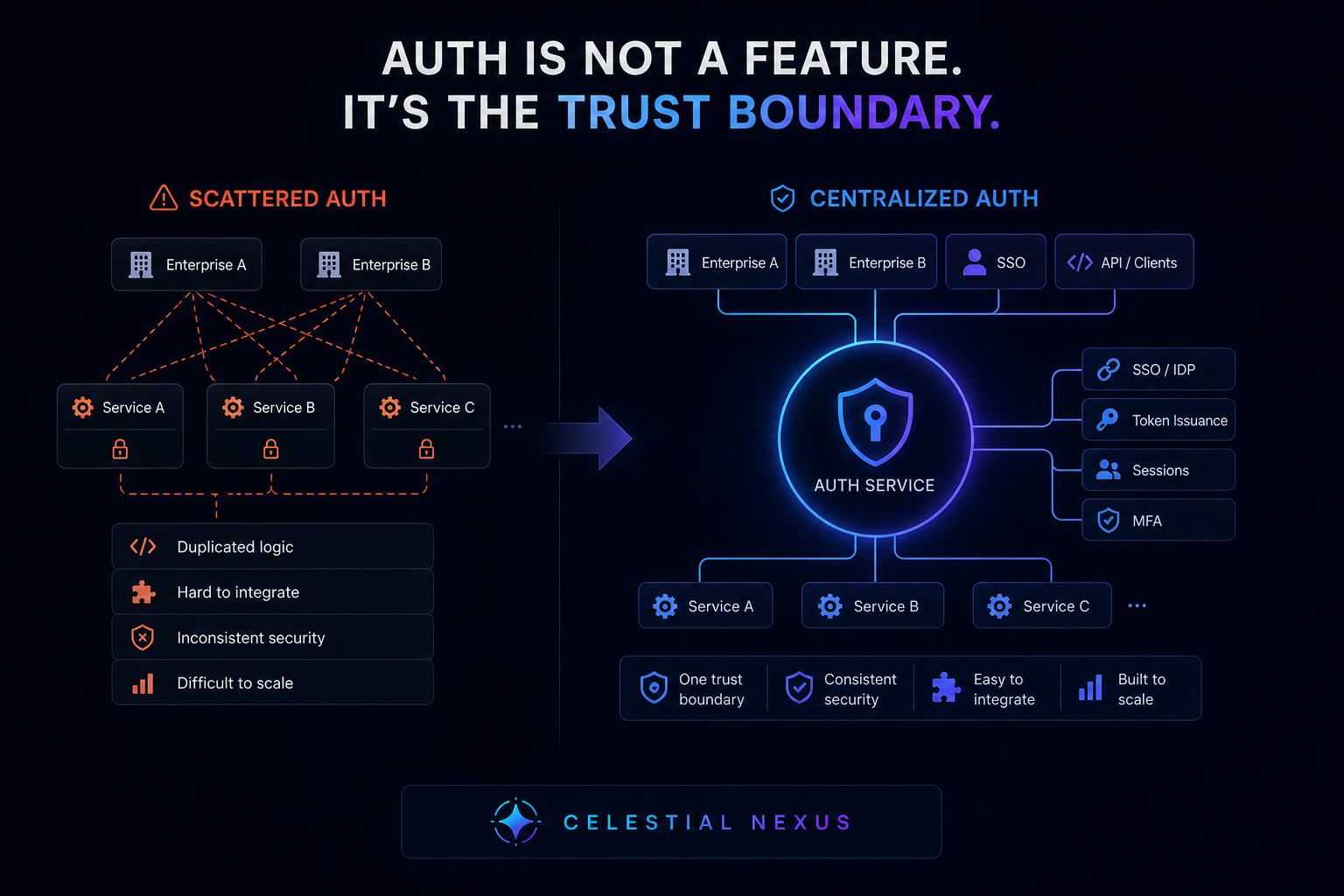
Most teams treat authentication as a feature. You add a login form, wire up a session cookie, maybe integrate an OAuth provider, and ship it. It works. Until it does not.
The second SSO request arrives. A new product team wants to reuse your user store. A compliance audit asks where your token validation lives. Suddenly auth is everywhere and owned by nobody. The code that started as a `UserController` is now load-bearing infrastructure that nobody wants to touch.
This is the trap: auth that was built as a feature cannot be refactored into a system without a rewrite.
Auth answers one question
At its core, authentication answers exactly one question: **is this request coming from who it claims to be?**
Everything downstream — authorization, tenancy, rate limiting, audit logging — depends on the answer to that question being correct, consistent, and fast. When auth is embedded in your application layer, the answer is only correct for that application. When a second app joins your ecosystem, you now have two sources of truth.
A system approach centralizes this question. You build one place — an Identity Provider — that issues signed, verifiable tokens. Every other service trusts the token, not a shared database session. The surface area does not grow with your product count.